




For more than four decades, ATR has defined regional aviation with a singular focus: delivering efficient, reliable, and increasingly sustainable turboprop aircraft that connect communities around the globe
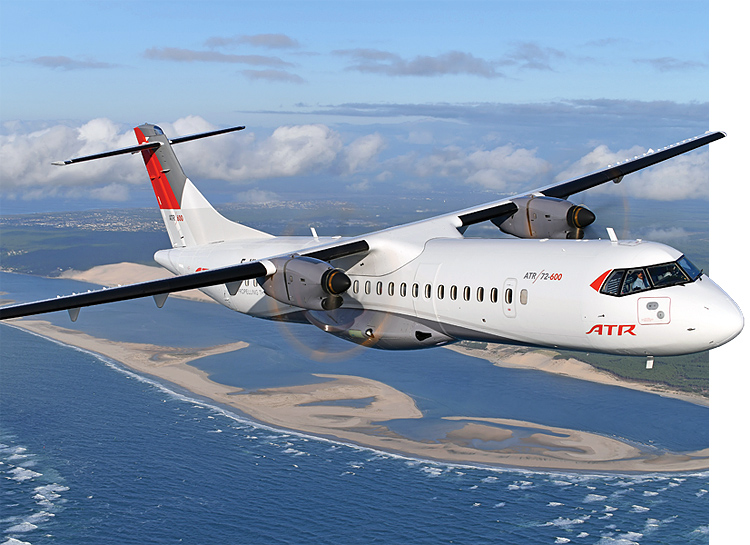
From remote airstrips to busy short-haul routes, the Franco-Italian manufacturer's ATR 42 and ATR 72 series have become the benchmark for regional turboprop performance. In doing so, ATR has not only led in sales and market reach but also in continuous product innovation and environmental leadership.
A PROVEN GLOBAL FOOTPRINT
ATR's journey began in 1981 as a collaboration between aerospace giants Airbus and Leonardo, with the goal of creating efficient regional aircraft capable of serving the world's most challenging routes. Today, ATR's influence is unmistakable. The company has sold nearly 1,900 aircraft since the programme's inception, with ATR models flown by around 200 airlines in more than 100 countries, opening an average of over 120 new routes every year.
The widespread adoption of ATR aircraft underscores a fundamental truth about regional aviation: demand is not only driven by large city pairs. Instead, it hinges on connecting smaller cities, islands, mountainous terrains and underserved corridors where economic viability and aircraft flexibility are paramount.
INNOVATION AT THE HEART OF TURBOPROP DESIGN
What sets ATR apart in the competitive regional aircraft space is its relentless pursuit of innovation tailored to real-world airline needs. ATR aircraft are powered by Pratt & Whitney Canada's PW127XT engines, which represent a significant evolution in turboprop propulsion. These advanced engines deliver not only a three per cent improvement in fuel efficiency, but also around 20 per cent lower maintenance costs and 40 per cent longer time on wing compared with earlier engine models.
This combination of performance improvements and operating savings underlines ATR's strategy of continuous enhancement rather than incremental change. Such technological upgrades ensure that ATR aircraft remain not only competitive against jets on short haul but increasingly efficient relative to their own previous generations.
ATR has also advanced versatility with variants like the ATR 72-600F freighter, addressing cargo requirements on regional networks, and innovations such as STOL (short take-off and landing) versions that promise even greater airport access flexibility.
SUSTAINABILITY AS A STRATEGIC PRIORITY
While economic efficiency has long been ATR's hallmark, sustainability has rapidly moved to the top of the company's strategic priorities. Recognising the urgent need to reduce aviation's environmental footprint, ATR has embedded sustainability into every aspect of its operations and product development.
ATR aircraft naturally offer significant emissions advantages over similarly sized regional jets. Robust independent data show that ATR turboprops can emit up to 45 per cent less CO2 per trip than comparable jets, a direct result of their efficient propulsion and aerodynamic design. This fuel efficiency not only reduces operational costs for airlines but also positions the aircraft as compelling solutions for carriers looking to meet stringent environmental goals.
Beyond the aircraft themselves, ATR's corporate commitment to environmental stewardship is comprehensive. The company's manufacturing sites are certified to ISO 14001 environmental standards, underscoring ongoing efforts to minimise pollution, optimise resource use and preserve biodiversity. ATR's near-term targets to reduce greenhouse gas emissions—validated by the Science Based Targets initiative—include a 50 per cent reduction in emissions from operational processes and energy consumption by 2030 compared with 2018 levels.
SUSTAINABLE AVIATION FUEL AND THE PATH AHEAD
One of the most tangible sustainability initiatives led by ATR has been in the arena of Sustainable Aviation Fuel (SAF). ATR was among the first regional aircraft manufacturers to demonstrate the viability of SAF at scale, completing the first commercial flight using 100 per cent SAF in both engines back in 2022.
Recognising that SAF availability remains a global challenge, ATR has partnered with industry stakeholders to simplify SAF adoption and broaden its reach. Agreements with SAF aggregators aim to streamline access for operators, ensuring that regional airlines—even those without direct physical SAF supply chains—can participate in emission reduction efforts.
ATR also supports creative mechanisms such as "book and claim" arrangements, which allow airlines to earn environmental credits for SAF use regardless of where the fuel is physically supplied. These innovations exemplify ATR's pragmatic approach to accelerating decarbonisation across the industry.
NEXT-GENERATION TECHNOLOGY: HYBRIDELECTRIC FLIGHT
Looking beyond SAF, ATR is at the forefront of future propulsion technologies. In partnership with the European Union's Clean Aviation Joint Undertaking, ATR is leading development projects that aim to fly the world's first hybrid-electric regional aircraft by 2030 using an ATR 72-600 test bed. These initiatives, part of Clean Aviation's Ultra-Efficient Regional Aircraft (UERA) programme, integrate hybrid-electric propulsion, advanced propeller systems and high-performance batteries into a nextgeneration aircraft concept.
ATR's flagship HERACLES project will explore hybrid configurations combining electric systems with engines optimised for 100 per cent SAF compatibility, offering a potential 30 per cent reduction in carbon emissions for future aircraft generations. This ambitious programme situates ATR as not just a leader in current turboprop technology, but a frontrunner in defining what low-emission regional aviation could look like in the decades ahead.
ECONOMIC AND CONNECTIVITY IMPACT
ATR's aircraft are designed not only for efficiency and sustainability but to enable route development that jets cannot economically support. Their ability to operate from short, less developed runways expands air connectivity options in underserved regions. This versatility underpins real socio-economic outcomes—connecting remote communities with larger economic hubs, improving access to healthcare and education, and enabling regional tourism and commerce.
By effectively lowering operating costs and emissions, ATR aircraft have helped airlines sustain yearround services on routes that might otherwise be marginal or unprofitable. The enduring appeal of turboprops in global markets—from Asia-Pacific to Europe and the Americas—illustrates the critical role of ATR's products in regional aviation ecosystems.
A SUSTAINABLE, INNOVATIVE FUTURE
As the regional aviation industry continues to evolve under environmental and economic pressures, ATR's leadership position is built on more than historical success. It rests on a future-focused vision that aligns technological innovation with sustainability imperatives and airline operational realities.
ATR's continuous improvements in engine performance, fuel efficiency, SAF integration and nextgeneration propulsion technologies highlight a commitment to responsible aviation growth. As demands for connectivity increase and emissions reduction targets tighten worldwide, ATR's turboprop aircraft are uniquely positioned not only to meet today's regional mobility needs but to help shape the industry's transition to a lower-emission future.
In an era where sustainability and economic performance are inseparable, ATR remains the global benchmark in turboprop aviation—proving that responsible air connectivity is possible without compromising operational efficiency or commercial viability.